Your AI Knowledge Base Should Live Where Your Team Already Works
The best place for your AI knowledge is a place your team will keep accurate. An impressive setup becomes a liability when nobody maintains it.
The two clients who chose Google Drive
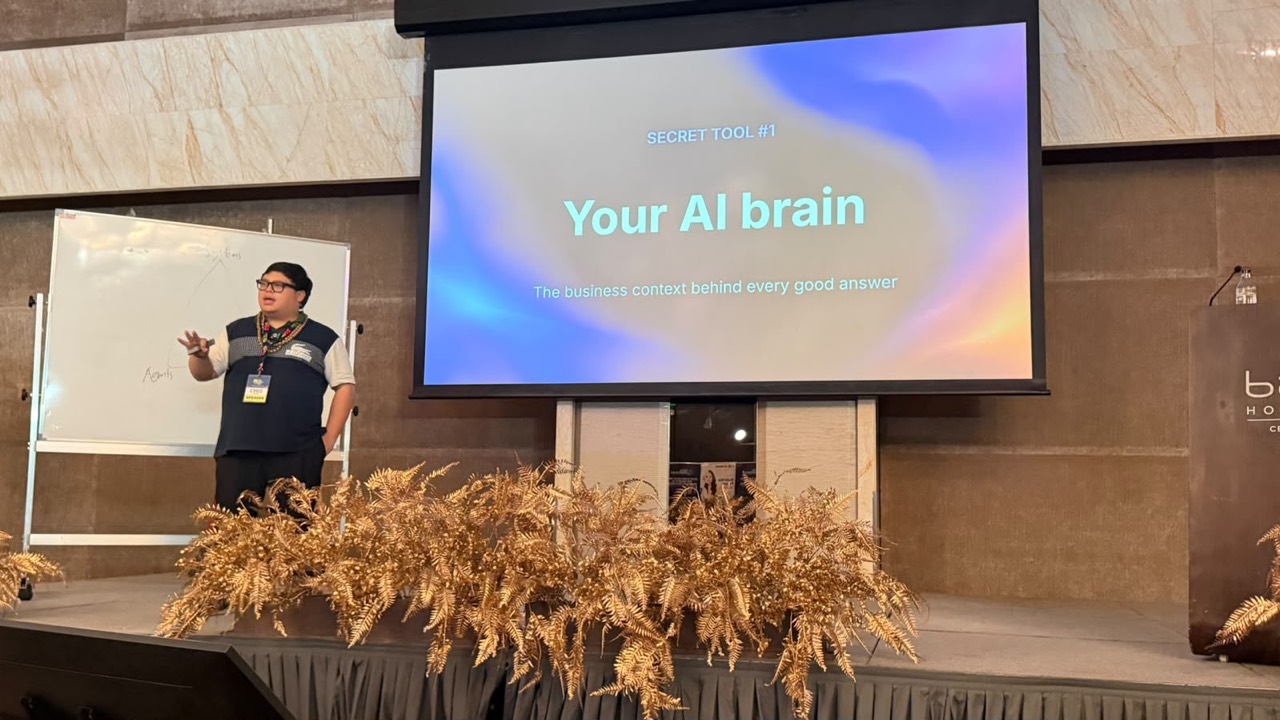
In Cebu, I shared a small lesson from setting up AI knowledge bases for clients. I had built their “AI brain” in Obsidian. Two clients preferred Google Drive because it was easier for them to use.
That is useful information about the system. If the people who know the business avoid the place where its knowledge lives, the information will fall behind the business.
My preference for a tool cannot be more important than their ability to maintain the work. Choose the home around the people who will update it.
Google Drive, Notion, Obsidian or GitHub?
| Your current working habit | A starting point | The question to resolve |
|---|---|---|
| Documents and shared folders | Google Drive | Which document is the approved version when copies conflict? |
| A shared team wiki | Notion | Who keeps the pages current and removes old guidance? |
| Linked notes and Markdown files | Obsidian | How will the people responsible contribute and review changes? |
| Versioned files and code | GitHub | Who reviews a change before the agent starts using it? |
This is a way to choose a working home, not a claim that every AI tool can read every platform automatically. Access and connections are a separate part of the setup.
Give the agent the business behind the task
A brand voice document is useful, but it cannot answer everything. In the talk, I put customer context, the offer, the journey, evidence and operating instructions alongside voice.
- The customer: who they are, what brought them here and the language they use.
- The offer: what is included, what is excluded and the next step.
- The journey: where the customer starts and where this particular interaction should take them.
- The work: the job description, operating steps and boundaries.
- The standard: examples of good work and an explanation of what makes them good.
- The evidence: approved case material and the exact claims it supports.
Keep these focused on the job. An inquiry assistant does not need a copy of every document your company has ever created.
Make stale information easy to recognize
A practical addition to that teaching is a small label on each operating document: owner, last reviewed date and status. For example: “Workshop access instructions. Owner: event coordinator. Reviewed: October 7, 2026. Status: current.”
Keep an archive for historical material and make it clear that the archive is not current operating guidance. When an offer changes, update the source the agent actually reads. Editing a sales page alone will not fix a separate outdated FAQ.
If two sources disagree, decide which one governs the job. Do not leave the agent to invent a compromise between an old price and a new price.
Test whether the knowledge is useful
Ask the questions a new team member would ask: Who is this for? What can we promise? What should we never promise? What happens after the customer says yes? Who handles an exception?
Then ask the agent to answer the same questions from the approved material. Missing answers reveal a knowledge gap. Contradictory answers reveal an ownership or version problem.
Your next action: Gather the current offer, a short customer profile, one operating procedure and two reviewed examples. Put them somewhere the responsible person can maintain. Use that small collection to support one agent job before expanding it.
The talk behind this guide
These lessons come from my October 2026 Future of Agencies session in Cebu. Read my talk recap for the teaching context. The organizer's 2026 agenda lists the session. The worksheets here expand on that teaching for use in your own business.
Source notes
Adapted from Cris Vinson's recent teaching in Cebu in October 2026. Edited into a practical guide; worksheets and hypothetical examples are added for application.
Make the knowledge usable
Bring the documents your team already works with. We can identify what one useful agent would need.