AI Can Replace Jobs. What Filipino Businesses Build Next Matters More.
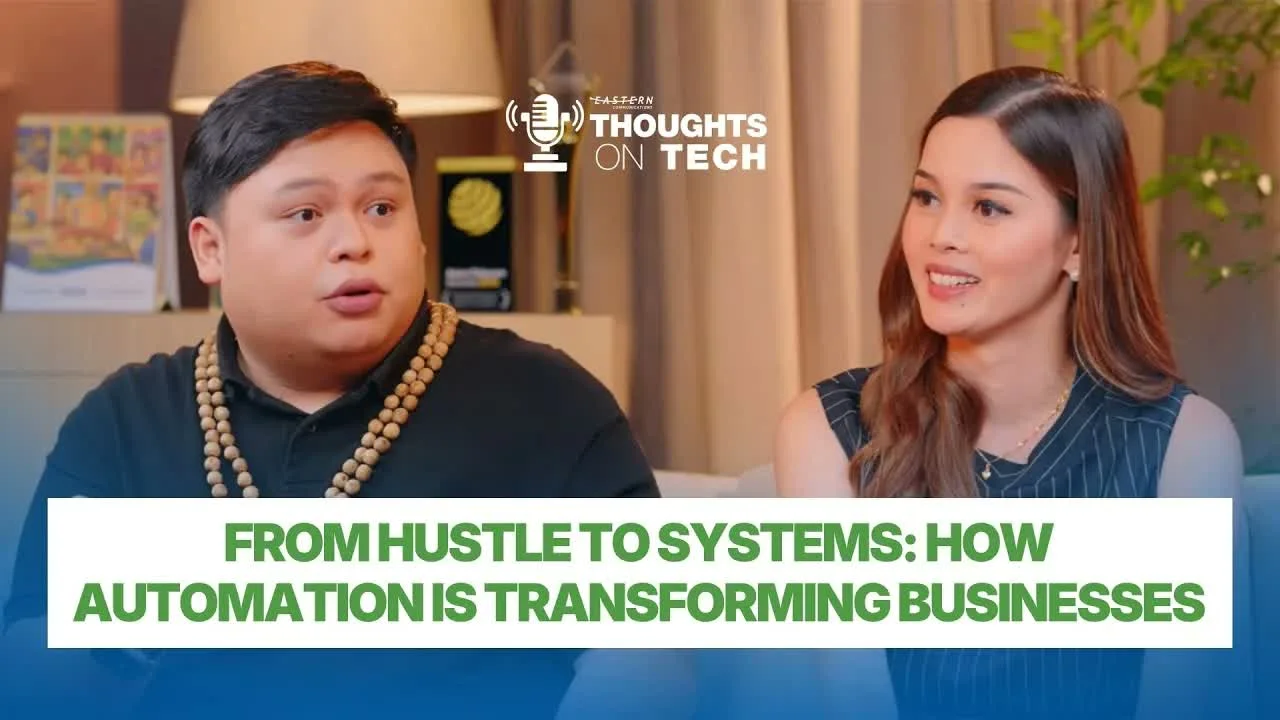
Watch the full Thoughts On Tech season finale from Eastern Communications.
When Eastern Communications invited me to be part of the Thoughts On Tech season finale, I wanted to understand the conversation I was entering.
Before flying to Manila, I spent time with the show's earlier episodes. Across 16 conversations, Thoughts On Tech had explored how technology affects Filipino jobs, businesses, education, safety, access, and opportunity.
This was not a show discussing technology from a distance. It was creating space for people working inside these changes to talk about what they mean for the Philippines.
That care was already visible before I entered the studio. The direction, questions, and coordination felt like parts of one considered conversation. I could see the work Vanessa Caro and the team had put into making the guest feel prepared and the audience feel respected.
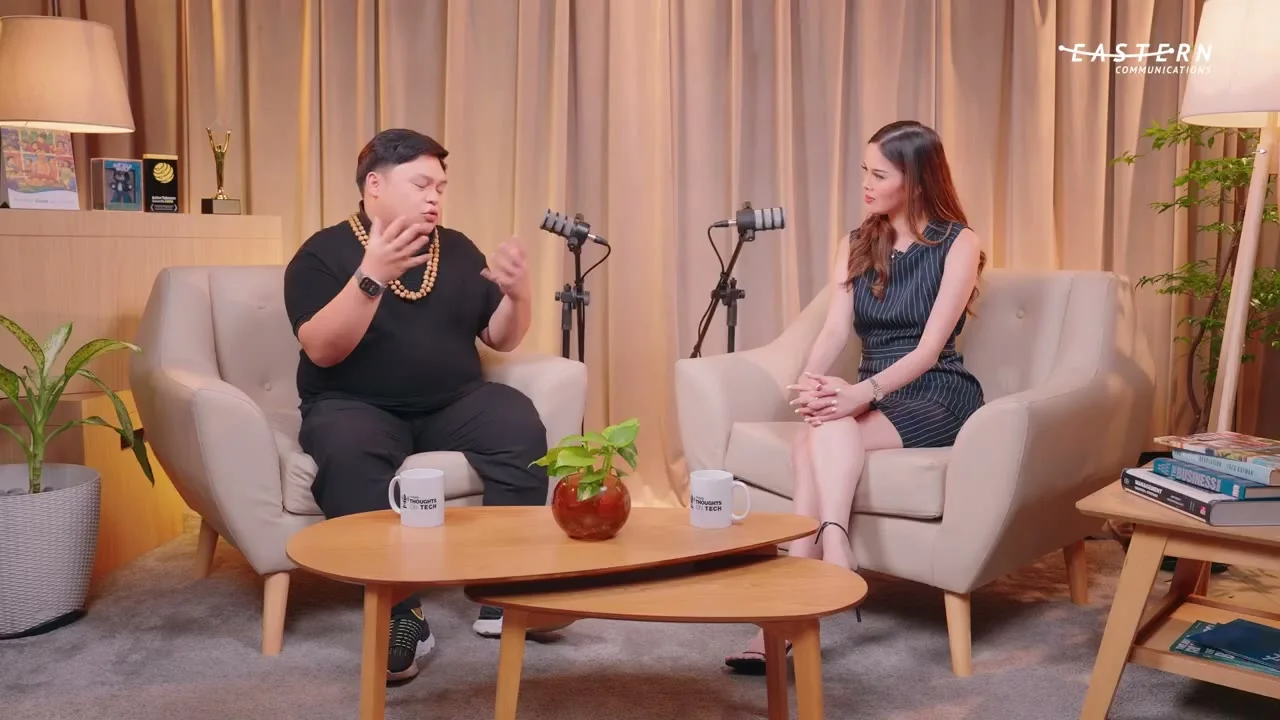
Once I arrived, I saw how the full production came together. The set, control room, recording strategy, and people behind every detail made visible the work viewers eventually experience as a natural conversation.
It was an honor to see Vanessa, our host Pauline Verzosa, and the Eastern Communications team bring it to life. Eastern later reported that Thoughts On Tech received Gold for Best Podcast in Technology at the 2026 APAC Stevie Awards. That recognition made sense to me after seeing the care behind the program.
The question I carried into the studio
I had heard a leader tell tens of thousands of entrepreneurs to stop hiring people because of AI. I kept thinking about what could happen if an entire audience took that advice home and acted on it.
Words like that can become hiring decisions. Those decisions can affect real livelihoods, fulfillment, families, and entire industries.
At the same time, I have seen what AI can make possible for entrepreneurs. It can help a smaller business build better systems, remove repetitive work, make clearer decisions, and serve more people without requiring the founder to carry everything alone.
The threat is real, but the opportunity is also as real.Cris Vinson, Thoughts On Tech
Both realities are true. Treating AI only as a threat misses the leverage. Treating it only as an opportunity ignores the people who may live with the consequences.
What does human-centered, AI-powered actually mean?
Human-centered does not mean keeping every process manual. It means using technology in service of people, while keeping judgment and responsibility with people.
Let AI handle repetitive administration, follow-up, drafting, and coordination so people can focus on decisions, creativity, craft, and care.
AI can produce an answer. It cannot own the consequences. The founder still decides what is right, what is useful, and where the line is.
The goal is not automation for its own sake. The goal is a business that serves more people, improves the work, and makes room for better human contribution.
A systems-driven business does not depend on the founder performing every task. Its recurring processes are clear, measurable, and delegated to the right mix of people, software, automation, and AI.
That shift matters because hustle is not a system. Long hours can hide broken operations for a while, but they cannot make those operations scale. If the founder must personally push every task forward, the business has not become a company yet. It is still a job with more responsibility.
What skills matter most in an AI-driven economy?
The first is critical thinking. Tools will change. Models will improve. New platforms will arrive. A person who can examine evidence, question an answer, understand context, and make a sound decision can learn whatever technology comes next.
The second is self-regulation. We need the ability to pause before fear, hype, social media, or an agreeable AI system makes the decision for us. Stillness, breathing, reflection, and knowing when to step away are not soft extras. They are part of responsible leadership.
The third is human connection. The more time we spend working with AI, the easier it is to assume other people share the same context. They do not. We still need to listen, explain, disagree, build trust, and, sometimes, touch grass.
Before the interview, I wanted to enter that room from stillness rather than performance. I grounded, prayed, and tried to make sure that whatever I said came through with love and honesty. I wanted to consider the impact-driven founder trying to build a better company, the person worried about losing work, and the people who will live with the consequences of how these tools are used.
The future I hope we build
Some of what I shared may scare people. I understand why.
AI can already do work that many competent people are paid to do. For the Philippines, where so much income comes from tourism, services, and BPOs, displacement is not an abstract future risk.
But fear is not a strategy. Neither is blind optimism.
The right people can build companies that are human-centered and AI-powered. Companies that create more value, serve more people, give founders room to live, and use their leverage to do more good.
Ten years from now, I hope those companies exist in a Philippines that still has beaches, forests, and parks. I hope nature and business align. Progress should make life more human, not leave us with efficient companies in a country we no longer recognize.
AI in the hands of impact-driven entrepreneurs creates the best outcomes.Cris Vinson
Thank you to Vanessa Caro, Pauline Verzosa, Eastern Communications, and everyone behind Thoughts On Tech for trusting me with a place in this conversation.
The full interview is now live. Watch it above, or open the episode on YouTube.
Frequently asked questions
Will AI replace jobs in the Philippines?
AI can already replace some tasks and roles, so displacement is a real risk for the Philippines, especially in service and BPO work. The outcome is not predetermined. Businesses can use AI only to cut people, or they can use it to remove repetitive work, improve systems, retrain teams, and create more valuable human roles.
How can Filipino entrepreneurs use AI responsibly?
Start with a real business problem, not an AI tool. Automate repetitive and bureaucratic work, keep human judgment and relationships in the loop, measure the outcome, protect customer and employee interests, and make the founder responsible for what the system does.
What is a systems-driven business?
A systems-driven business does not depend on the founder performing every task. Its recurring processes are clear, measurable, and delegated to the right mix of people, software, automation, and AI, while human leaders retain judgment and accountability.
What skills matter most in an AI-driven economy?
Critical thinking, self-regulation, communication, and human connection matter most. Critical thinking helps people judge new tools. Self-regulation keeps decisions from being driven by hype or fear. Human connection protects the context, trust, and judgment that AI does not own.
Where can I watch Cris Vinson on Thoughts On Tech?
Watch the full episode, From Hustle to Systems: How Automation Is Transforming Businesses, on Eastern Communications' YouTube channel. The video is also embedded near the top of this article.

