
 Cris Vinson
A Life You Can
Come Home To
Seven chapters about money, freedom,
and learning to live with both.
Before the journey
“Just this one thing,” Mara said.
Her daughter stood beside the table, holding a plate. Mara was finishing something for work. Once she sent it, they could eat.


There was always a reason to finish.
The work paid the school fees. It helped her parents. It was putting money toward a home her family could keep. Every time she opened her laptop, she could name someone she was doing it for.

When Mara pictured the life she was building, everyone was around the same table.
For now, her laptop occupied the place where dinner should go.
She understood how people ended up here.
There was an old story about two houses. In the first, each generation found less to share. In the second, there was enough, and work for anyone who could help it grow.
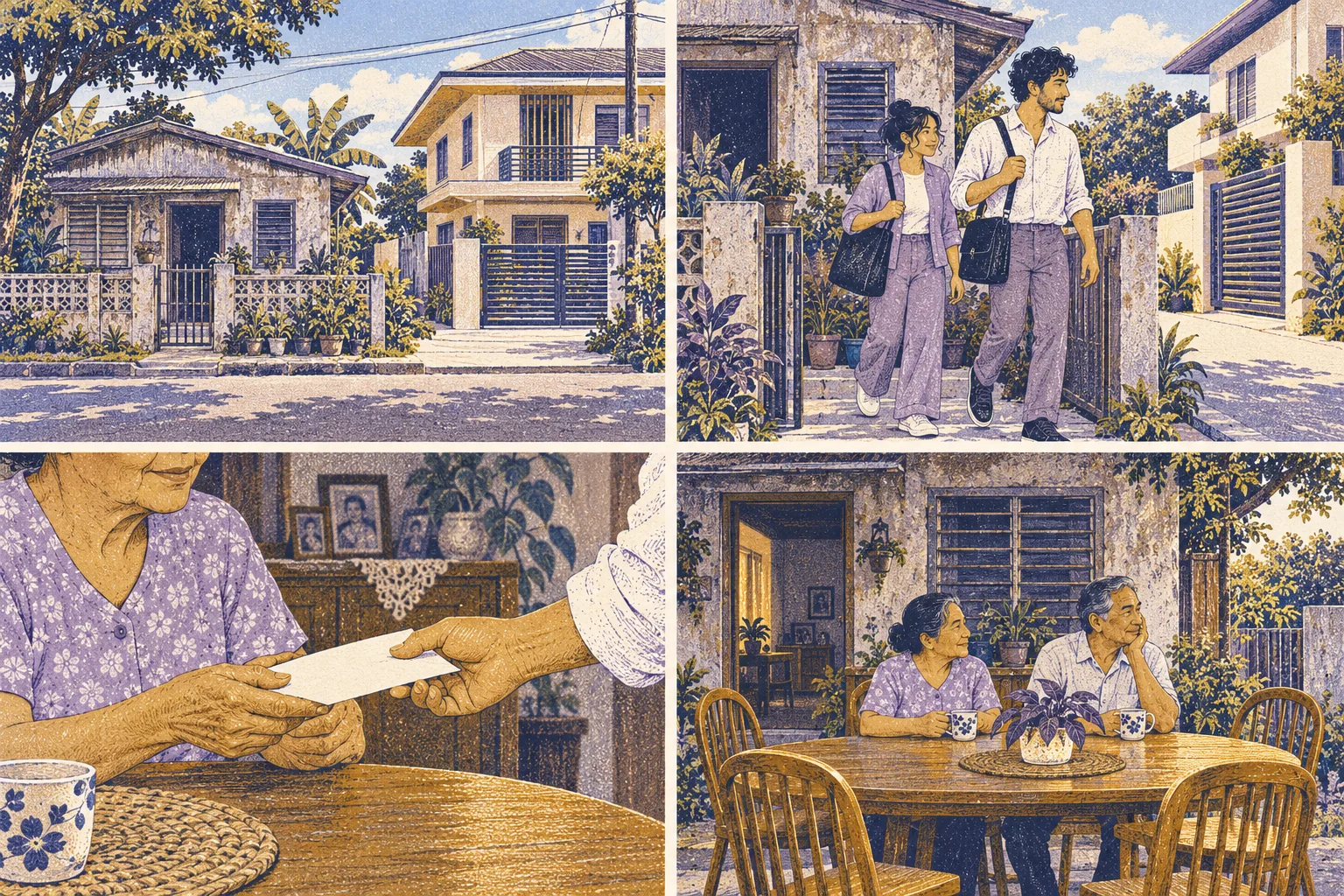
The young people of the first house went to work in the second. They meant to send money home, then return. Their work helped the second house prosper. Their money helped the first house survive.
Years passed. The first house grew older. There were repairs, expenses, and chairs waiting for people who could not yet come home.
Mara understood why they stayed away. She understood the calculations behind another year, another contract, another sacrifice.

She wanted to provide enough that her family would finally be able to stop worrying.


She had begun to believe there would be a clear moment when she had done enough.
Until then, there was work to finish.

01 / The Dreamer
The life that starts later
Mara’s friend Eli kept a different life in a notebook.
A repair service. A small workshop. Something he could own.
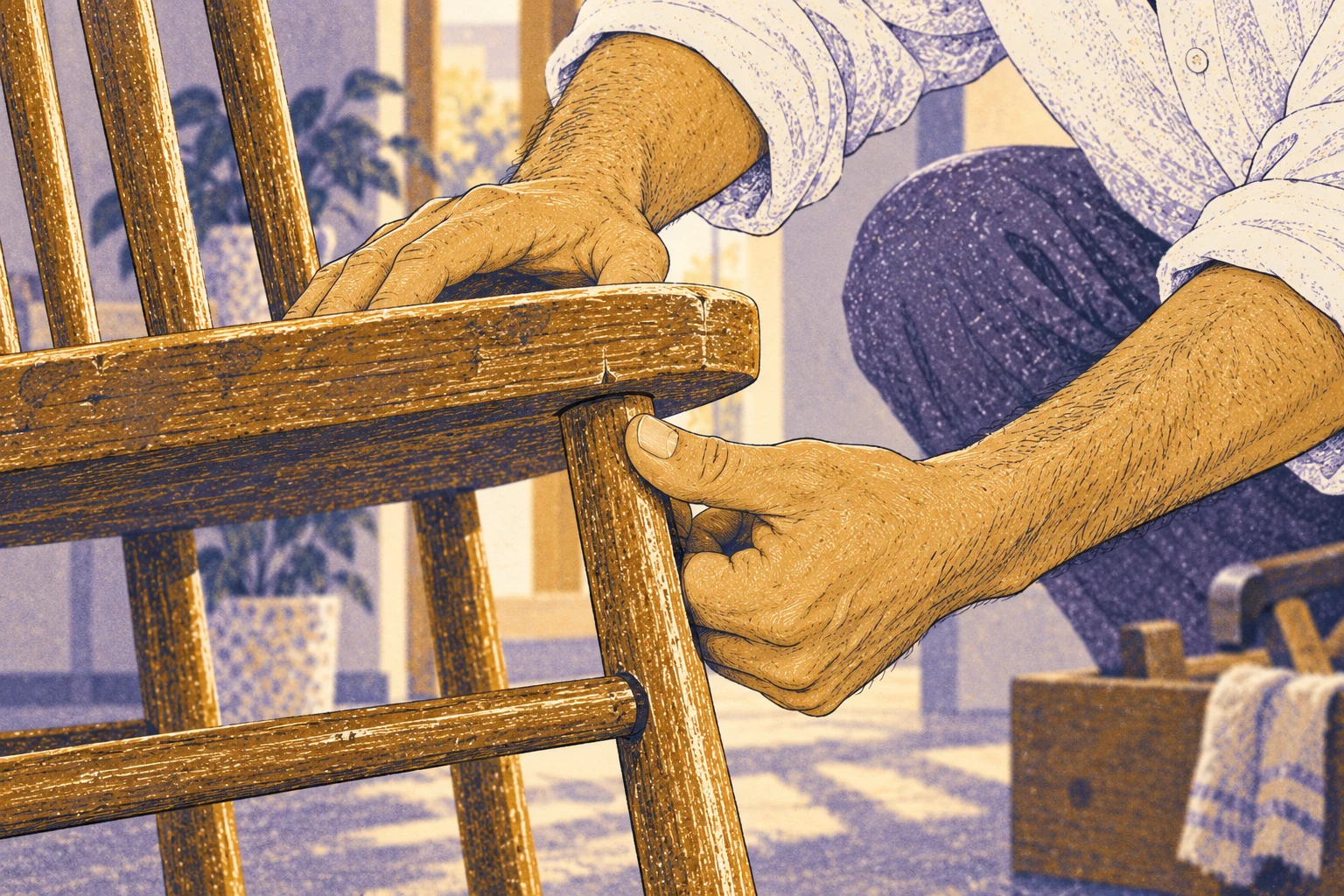
He could fix almost anything. When a chair loosened or a cupboard stopped closing, his hands seemed to understand the problem before he could explain it.
Starting a business was harder to picture.
He knew what rent cost. He knew what happened to a month’s budget when his son became ill. Trying something new meant making room for the possibility that it would fail.
So he prepared.


During the months when school and work kept finding their way into the same room, he watched people online explain how quickly a person’s life could change. At night, he wrote down what he would need. Tools. Materials. A name.

By morning, another page was full.
Mara liked those conversations. They could spend an evening imagining what would become possible once everything was ready. For a while, the future felt close enough to touch.

One evening, Eli showed her a name for the business.


“Who would you help first?” she asked.

He turned back through the notebook.
There were sketches for a sign. Lists of equipment. Names he had already rejected. He had spent hours thinking about how the business would look.
He had spent much less time thinking about the first person who might need it.
Next door, a neighbor had been asking about a broken chair.


Eli went over to look at it.
The notebook stayed on the table.
He still had rent to pay. He still had a son to care for. But now there was a real chair in front of him, and someone waiting to see what he could do.
02 / The Villager
A life worth protecting
The neighbor told someone else.
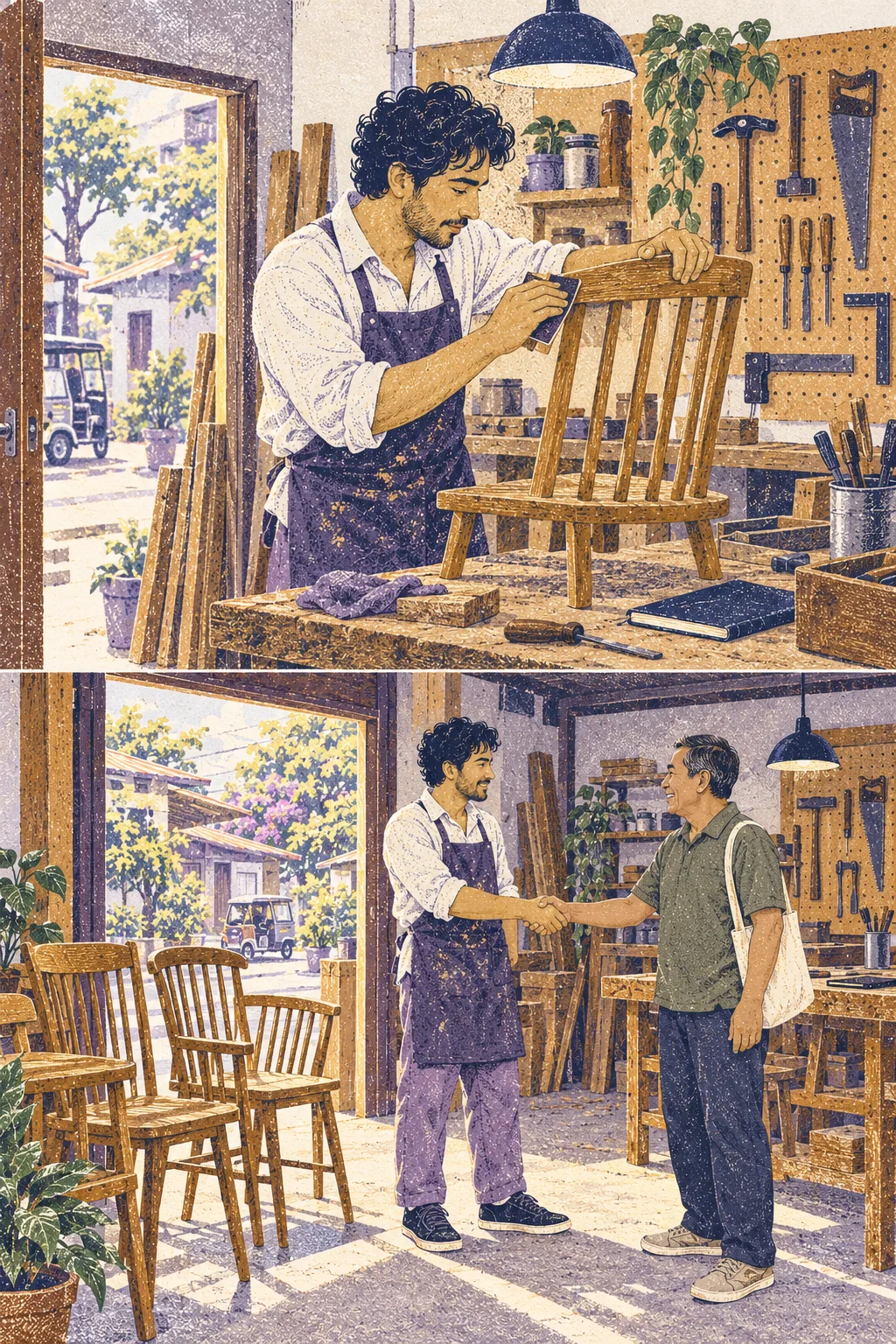
A few repairs became regular work. Eli learned what people would pay, which jobs took longer than expected, and how much he needed to set aside for materials.
He kept his other work while the workshop found its footing.
Eventually, an ordinary month became manageable. He could pay the bills and save a little. Customers knew where to find him. On Thursdays, he collected his son from school.
These were things he had wanted for years.

When Mara visited, two repaired chairs waited by the door.
“You could make this much bigger,” she said.
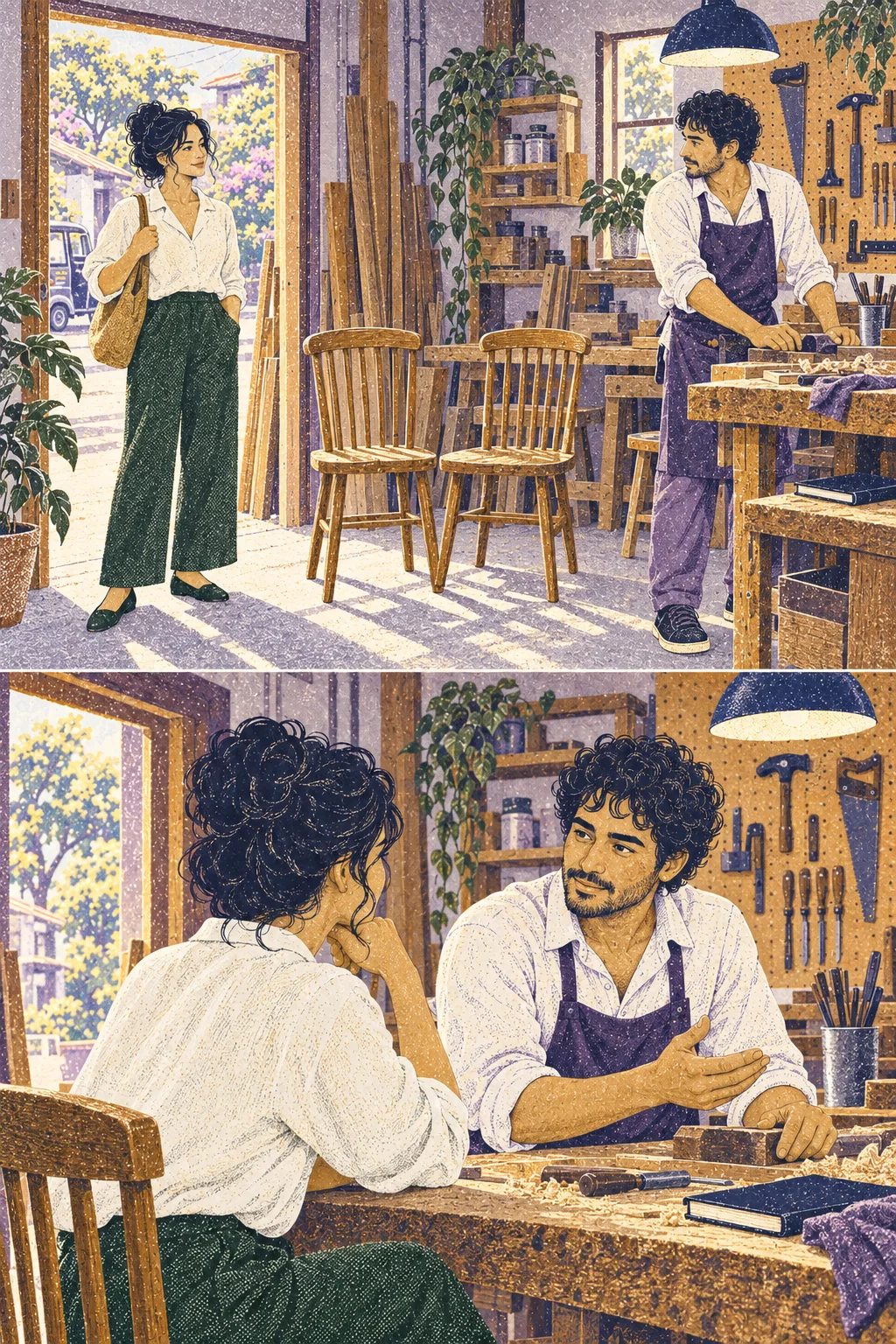
“Probably. What would I need to change?”
She began explaining. More customers. Larger orders. Someone to help with the work.

Eli listened until his phone reminded him it was time to collect his son. Then he put away his tools and left.

Mara watched him go. She had been describing what a larger business could give him. Thursday afternoon already belonged to something he valued.
Still, the workshop was vulnerable.
Materials became more expensive. Customers postponed repairs. Eli adjusted his prices, then worried about the people who had trusted him when he was starting.

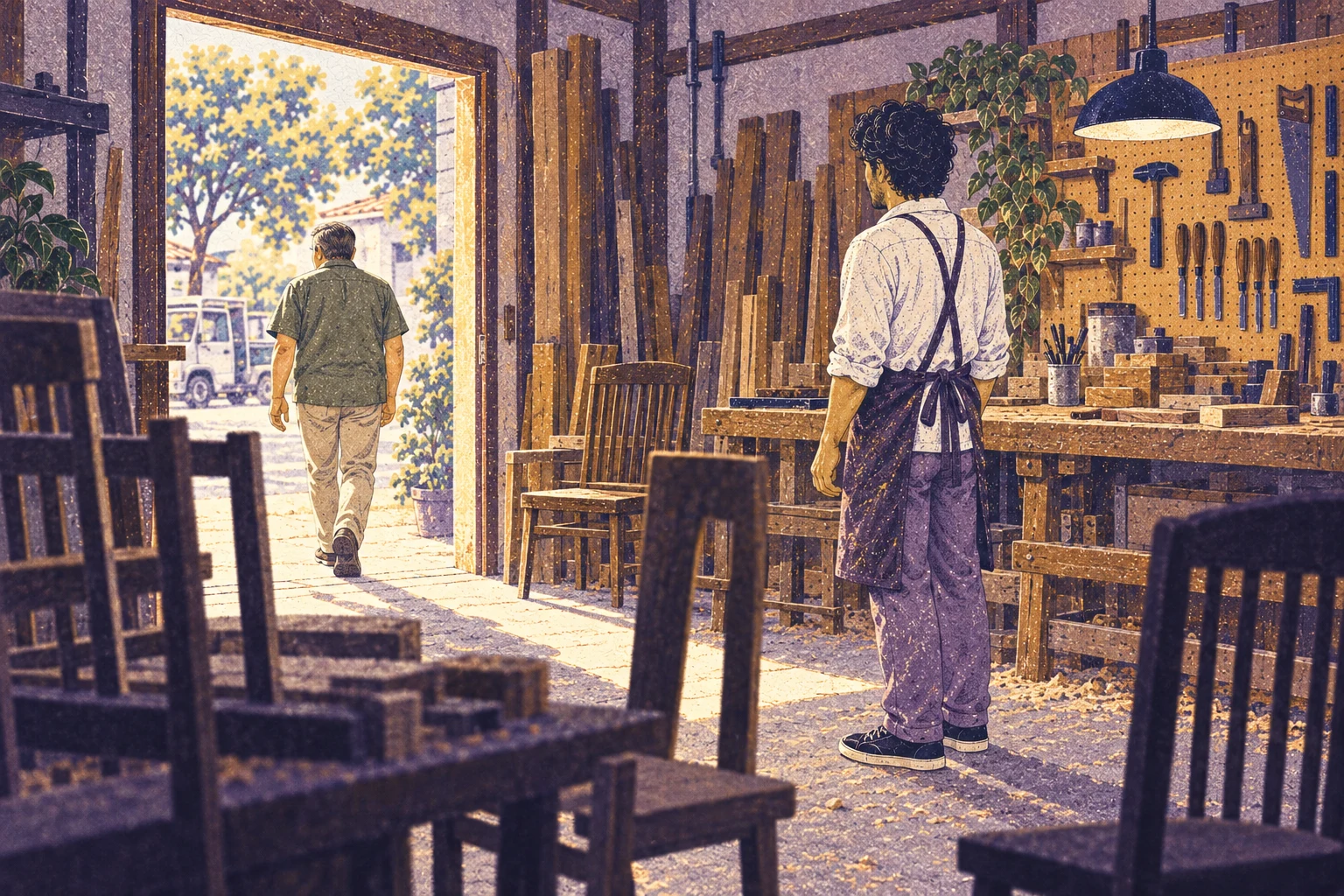
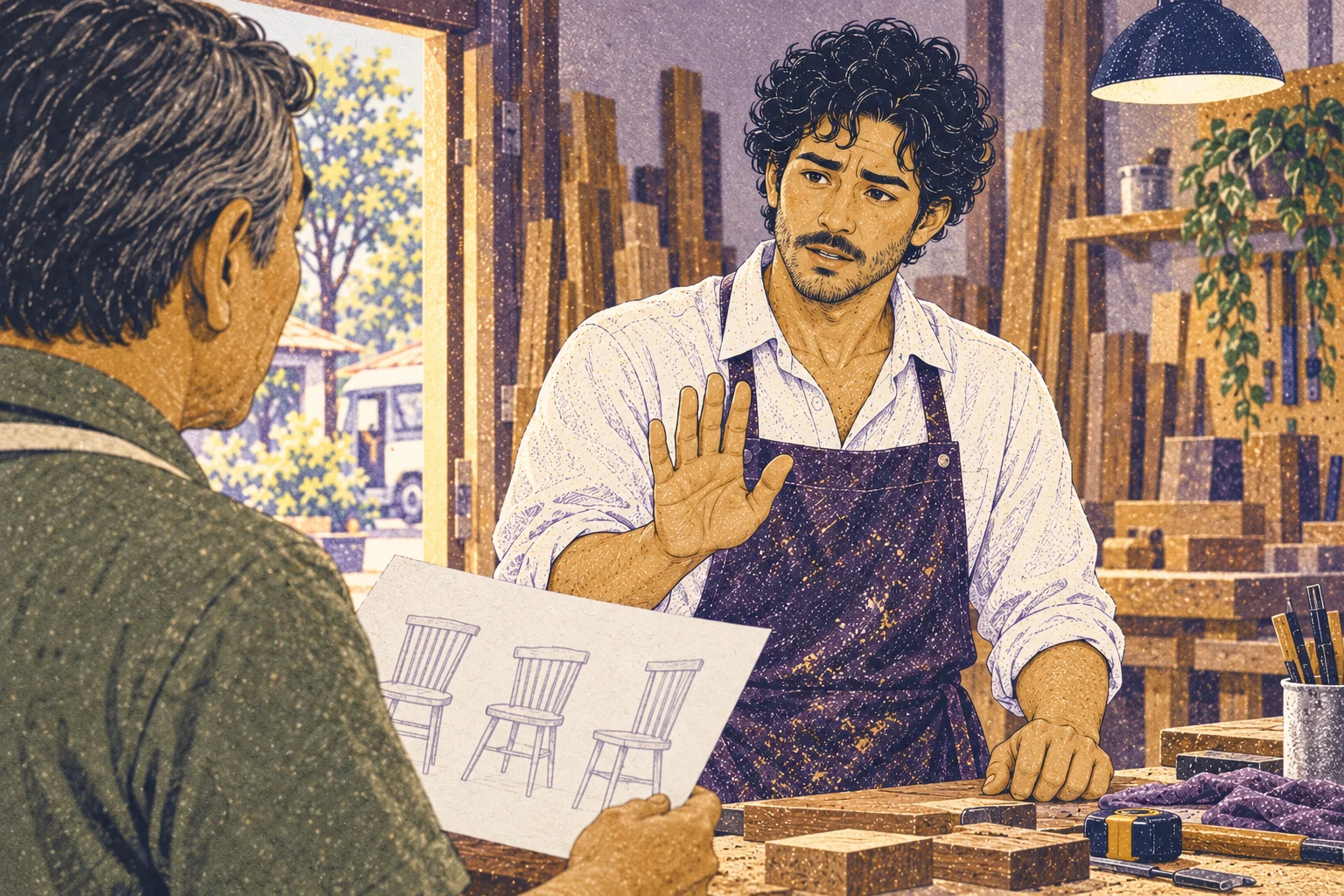
When a nearby shop asked about a larger order, he almost refused before hearing the details.
He had worked hard to make life dependable. Now an unfamiliar opportunity felt capable of taking that dependability away.

Mara saw his worry and made a promise to herself.
She would earn enough that a delayed payment could not frighten her. She would become good enough that work would always be waiting.
If she kept improving, she thought, eventually she could make uncertainty disappear.

03 / The Captive
Everyone is counting on me
Her manager, Jonas, seemed to know how.
He earned well. He understood the work. When a project went wrong, people looked relieved as soon as he entered the room.
He fixed the problem. They thanked him.


The next problem came straight to him.

Mara learned quickly.
AI helped her turn ideas into things clients could try. She could produce more, solve problems faster, and take on work that would once have felt beyond her.


Her pay improved. She helped her parents with expenses and began saving for a home.
When her daughter needed something, Mara could increasingly say yes.

Time was becoming harder to give.
“When do you take a break?” she asked Jonas.
“Once we get this next bit sorted.”


Soon she was saying it too.
Before an important launch, Lina, her colleague, flagged a problem. The AI customer-service assistant they had built could sound certain even when its answer needed checking.
Mara had a presentation with the directors that afternoon. Another team wanted the same budget. She had already told people the project would be ready.
Listening to Lina would mean reopening a decision she wanted to consider finished.


“We’ll handle the exceptions,” she said.

They launched.
A customer received a promise the business could not keep. Then another. The client paused the project.
Mara worked late preparing an explanation. There was plenty to explain: the deadline, the pressure, the decisions other people had made.
At home, her daughter stood beside the table with an open schoolbook.

“Are you listening?”
“Yes.”

“What did I say?”
Mara looked up.
For a moment, she had no explanation to offer.

Over the following days, she found explanations for everything else. The directors had rushed them. The client expected too much. Lina should have raised the issue differently.


By the time Mara booked a short trip, she was convinced that distance would help.
She wanted to be somewhere nobody needed anything from her.
04 / The Escaper
The conversation that follows you
On the ferry, Mara met Noor.


Noor was a freelancer traveling with a small bag and no fixed return date. She could change where she stayed and when she worked. Her income was less dependable, so she kept her expenses low.
Mara had spent years trying to earn more.
Now she envied someone who earned less.


They kept each other company over the next few days. Mara slept. She walked without checking the time. She called her daughter and listened to a story that had nothing to do with school.

She began to feel like herself again.
Then, one evening, Noor’s phone lit up.
A former collaborator wanted to discuss unfinished work and money.
Noor turned the phone over.
Mara did the same with hers.


They spent the evening explaining why the people waiting at home were being unreasonable. Each woman understood the other’s frustration. Each had a reason the conversation could wait.
On the last night, Mara checked whether Lina had apologized.
Noor watched her refresh the screen.

“What would you want her to apologize for?”

Mara began with the directors. Then the budget. Then the deadline and everything that depended on it.
Noor waited.
Mara heard herself telling the story again. She knew where every explanation belonged. She knew how to make the pressure understandable.

Eventually, she put down the phone.
She had described everything except the problem Lina had tried to show her.
The trip had given her room to breathe.
She was beginning to see what she needed to do with that room.
05 / The Pathfinder
Choosing what comes next
Back home, Mara wrote Lina a message.
It was long at first.


She explained the deadline. She explained the directors. She explained how much responsibility she had been carrying.
Then she started deleting.
The paragraph about the deadline went first. The explanation about the directors followed. Finally, she removed the sentence beginning, “You have to understand.”

What remained was shorter.
“You raised a real problem. I dismissed it. I’m sorry. Can you walk me through what I missed?”
Lina agreed to talk.


Afterward, she remained careful about what she trusted Mara with. Mara had hoped the apology might make things feel normal again. Instead, she had to let Lina decide how much trust to give.
Noor called that week.
She had spoken with her collaborator, agreed what she owed, and made a repayment plan. She was keeping some travel and accepting fewer commitments.


Her plans were becoming more deliberate. Other people could begin to rely on them.
Mara started asking different questions too.
What did her family actually need each month? Which clients could she serve well? What hours was she willing to promise? Where was she pretending she could manage alone?


The answers were less impressive than the future she used to describe. They were also more useful.
At a school meeting about AI in homework, her daughter said she had received the right answer and still could not explain it.
Mara had come ready to defend the technology.

This time, she let her daughter finish.
She was beginning to notice how often she entered a conversation already rehearsing what she would say.
Later that week, Eli brought dinner while she was working through the delayed project’s accounts. Mara immediately offered to help with his website in return.


“You can eat first,” he said.
He put the food on the table and stayed.

Mara was used to knowing what made her useful. Sitting with someone who expected nothing from her that evening felt unfamiliar.
She left the accounts where they were.
They ate.
For once, she allowed care to reach her before she worked out how to repay it.
06 / The Scaler
The opportunity she could not refuse
At work, Jonas was making changes of his own.
He began explaining which decisions people could make without checking with him. Routine work had a process. AI handled useful tasks, with people checking the places where a mistake would matter.


Sometimes a colleague made a sound decision differently from him.
Jonas practiced letting it stand.
Mara watched what happened. The work continued. People became more capable. Jonas had fewer problems arriving at his desk simply because everyone was accustomed to bringing them there.
Over the following year, she prepared to start a small service of her own.
She finished the work she owed his team. With permission, she tested the service outside her working hours. She waited for repeat customers and savings before leaving.




Some customers were overseas. Most of her life remained close to home.
She chose clients carefully and set clear working hours. Lina eventually joined her, after seeing Mara listen to difficult feedback and follow through on what they agreed.
The business grew.


They put money aside. People could take time off. Mara kept the afternoons she had promised her daughter.
Then came the client she had always wanted.
A recognizable name. A larger contract. A result she could already imagine announcing.
The team had prepared a proposal they could deliver.

In the meeting, Mara offered more.
Faster replies. Additional work. A deadline they had already discussed and rejected.
She could explain why it made sense. The team needed the opportunity. Her family could use the security. A client like this might change what became possible for everyone.
Lina asked when they had agreed to the new promises.

Mara said they needed to be flexible.
Within weeks, decisions were coming back to her at night. The afternoons became harder to protect. When Lina warned that the arrangement was breaking their schedule, Mara called it a lack of commitment.
Lina resigned.
Mara had been so close to the life she wanted that she had assumed she understood how to protect it.
Under pressure, she had reached for a familiar response: take over, promise more, prove she could carry it.
For years, being able to carry things had helped her survive.
Now other people were carrying the consequences of her promises.
Repair was expensive.


She reduced the contract. She returned money for work they could not responsibly deliver. She told the team which promises had been hers.

Lina accepted the apology.
She kept her decision to leave.
Mara had to continue with the repair even though it would not restore everything she had lost.
When she called Jonas, he listened.
“What would you do?” she asked.


“What have you already decided needs to happen?”
She told him.
He stayed on the phone while she worked out how to begin.

07 / The Leader
A life she could come home to
Rebuilding took longer than Mara wanted.
There were promises to reconsider, routines to change, and decisions she could no longer make simply because she wanted the answer to be yes.
She became more willing to hear that something was not working.

Over time, the business paid reliably again. The team could handle ordinary work without every decision returning to her. The reserve grew.
Then a long-standing client closed its business.
Its largest customer had pulled out. There was no conversation Mara could have that would bring the contract back.

At the team meeting, she admitted that she was afraid.
Before making new promises, they looked at their expenses. They decided what they could sustain and contacted former customers.



Mara postponed a trip. One colleague chose a more secure job, and she helped with the reference.

They found enough work to continue.
They still had to live with the lost income.
Mara had once imagined becoming so capable that events like this could no longer reach her. Now she could see what preparation had actually given them: time to think, some choices, and the ability to face the situation together.
There were smaller tests too.
At a school meeting, a decision went against what she wanted. She asked how it had been reached, disagreed clearly, and helped her daughter understand what they could do next.


At work, a teammate admitted a mistake.
Mara felt the familiar impulse to take the task back. She could already see how she would fix it.


She waited before speaking.
“Tell me what happened.”

They corrected the work. The teammate kept ownership.
Mara also made time to teach someone entering the field. They agreed what she could help with and what the learner would need to do independently.
She was learning to offer help she could sustain.


Her friends were still learning too.
Eli worried about the workshop. Noor wanted to travel. Jonas caught himself answering questions someone else could answer.
They had become people who could tell one another these things without first pretending to have everything under control.
One evening, they came to Mara’s home for dinner.
Eli brought his son. Noor helped carry the dishes. Jonas arrived after closing his laptop.


Mara’s daughter set out the plates.
The house was modest. There were expenses to plan for and work waiting tomorrow. Some of that work came from people far away. It helped pay for the life taking place around this table.
For years, Mara had imagined that she would become present once she had provided enough.
There had always been another expense, another opportunity, another reason to wait.

Her daughter called her to the table.

Mara sat down while the food was still warm.
Your chapter
You may recognize yourself in more than one of these people.
You may be preparing to begin, protecting something you worked hard to build, or discovering that a life which looks successful has left you very little room.
You may have made a change and found yourself repeating an old pattern somewhere new.
Some chapters begin with a choice. Others arrive through loss, responsibility, illness, or circumstances nobody chose.
Start with what is true now.
The Wealth Freedom Assessment uses 24 paired statements to help you look at your money and your freedom together. You receive two scores, a current profile, and practical next steps.
Find where you stand, then consider what your next chapter needs.
These profiles describe your current circumstances. They do not measure your character or worth.
Free assessment. No account needed.
Enter your contact details after the questions to see your result.